Best Sustainable Laundry Products
A practical guide to sustainable laundry — detergent sheets, wool dryer balls, soap nuts, and mesh wash bags compared on materials, packaging, and real performance.
March 19, 2025
The typical household does 300 loads of laundry a year. That's 300 doses of detergent from plastic jugs, plus dryer sheets that are single-use polyester coated in fragrance chemicals. The waste adds up fast — and most of it is completely avoidable. Sustainable laundry swaps are low-effort, cost-competitive, and in several cases actually work better than what they replace.
Our Top Picks


Concentrated & Plant-Based Detergents
Most liquid detergent is 60–90% water. You're paying to ship water across the country in a plastic jug. Concentrated formulas — whether liquid refills, powder, or detergent sheets — cut packaging by 80%+ and clean just as effectively.
Look for plant-derived surfactants (coconut or palm kernel oil based), no optical brighteners, no synthetic fragrance. The ingredient list should be short and recognizable.
Detergent sheets are the newest format: pre-measured, dissolve completely, and ship in a paper envelope. They're especially good for apartments and small spaces where storing jugs is a pain.


Wool Dryer Balls
Wool dryer balls replace single-use dryer sheets and fabric softener. They work by physically separating clothes as they tumble, which improves airflow and reduces drying time by 15–25%. That saves energy on every load.
A set of 6 New Zealand wool dryer balls lasts 1,000+ loads — roughly 3 years of use. Compare that to a box of dryer sheets that lasts a few months. Add a few drops of essential oil to the balls if you want scented laundry.


Soap Nuts
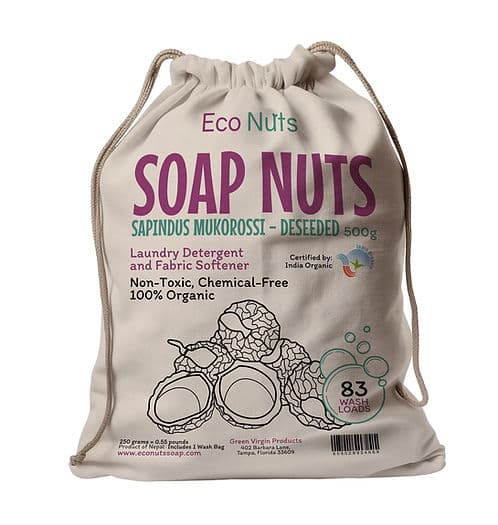
Soap nuts (actually dried berries from the Sapindus tree) are about as zero-waste as laundry gets. They contain natural saponin that releases soap when agitated in water. Toss 4–5 in a cotton bag, throw it in the wash, and reuse the same nuts for 5–6 loads. When they're spent, compost them.
They work best in warm water and produce minimal suds, which is actually fine — suds don't equal clean. The tradeoff: they're less effective on heavy stains and oily fabrics. Keep a stain stick around for those loads.

What to Look For
- Concentrated or waterless formats — sheets, powders, or refill concentrates. Less packaging, less shipping weight
- Plant-derived surfactants — coconut or palm kernel based. Avoid petroleum-derived surfactants (SLS from synthetic sources)
- No optical brighteners — they don't clean; they deposit UV-reflective chemicals on fabric that wash into waterways
- No synthetic fragrance — "fragrance" on a label can mean dozens of undisclosed chemicals. Use essential oils or skip scent entirely
- Recyclable or compostable packaging — paper, cardboard, or glass. Avoid HDPE jugs when better options exist
The Bottom Line
Switch to a concentrated detergent (sheets or refillable liquid) and a set of wool dryer balls. That alone eliminates most laundry-related plastic and saves energy on drying. If you want to go further, try soap nuts for lightly soiled loads. The whole setup costs less per year than conventional products and produces almost no waste.